What Is Forex and Why Does It Exist?

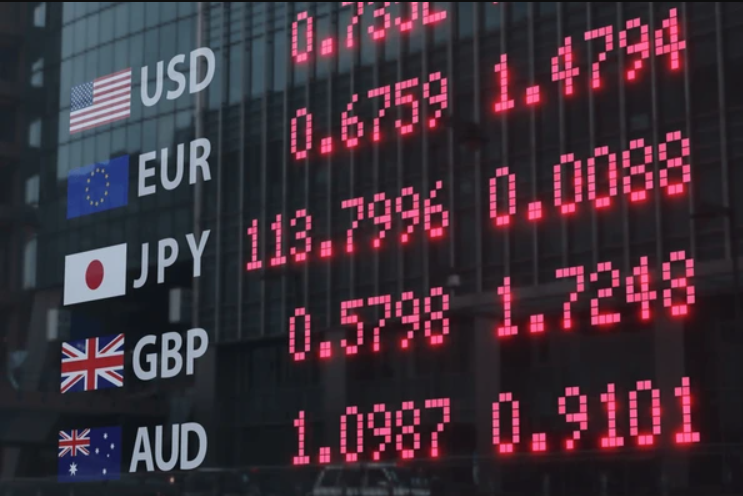
The foreign exchange market (Forex or FX) is the largest financial market in the world, where all global currencies are traded. Its participants range from major financial institutions and central banks to retail traders with only a few hundred dollars, making Forex both highly liquid and widely accessible. With an average daily trading volume exceeding $7 trillion, it outpaces all other financial markets in size and activity.
Forex trading allows participants to buy and sell currencies, either to profit from exchange rate fluctuations or to hedge against risks. While Forex trading can occur through banks or online platforms, it is most commonly conducted using Contracts for Difference (CFDs), which allow traders to speculate on price movements without owning the underlying currencies.
Why Forex Exists
Forex was created to facilitate international trade, investment, and travel. It allows participants to convert one currency into another efficiently. For example:
- Businesses need to convert currencies to pay for goods and services abroad.
- Investors require foreign currency to purchase international assets.
- Travelers need local currency when visiting other countries.
Beyond these practical purposes, Forex has evolved into a speculative trading market, where traders seek profits from currency price movements. This speculative activity adds liquidity and depth to the market, helping ensure efficient price discovery.
Understanding Currency Pairs
Currencies are traded in pairs, reflecting the relative value of one currency against another. Each pair consists of:
- Base currency: The first currency in the pair.
- Quote currency: The second currency in the pair, representing how much of this currency is needed to buy one unit of the base currency.
For example, in the EUR/USD pair, a quote of 1.1305 means 1 Euro can be exchanged for 1.1305 US dollars. If the EUR/USD rate rises to 1.1405, the Euro has strengthened relative to the US dollar. Traders can buy the pair to profit from Euro appreciation or sell it if they expect it to depreciate.
Major vs. Minor Currency Pairs
Currency pairs are generally divided into major pairs, minor pairs, and crosses:
- Major pairs include the most liquid and widely traded currencies paired with the US dollar, such as EUR/USD, USD/JPY, GBP/USD, USD/CHF, USD/CAD, AUD/USD, and NZD/USD.
- Minor pairs involve currencies that do not include the US dollar or are less traded, such as EUR/TRY, EUR/RUB, USD/SEK, USD/HKD, USD/KRW, and AUD/SGD.
These categories help traders identify liquidity levels and volatility, which are critical for developing trading strategies.
Key Factors Affecting Exchange Rates
Several factors influence the value of currencies and the exchange rates of currency pairs:
- Economic Data: GDP, employment, inflation (CPI, PPI), and industrial production can impact a country’s monetary policy and currency value.
- Central Bank Policies: Interest rate decisions directly affect currency demand and supply. Higher rates can attract investment and strengthen a currency.
- Political Environment: Trade conflicts, elections, domestic unrest, or wars can destabilize currencies, leading to depreciation.
Understanding these factors helps traders anticipate market movements and make informed decisions.
How Traders Earn from Forex
Traders can profit from Forex through:
- Interest Rate Differential (Carry Trade): Borrowing a low-interest currency to invest in a higher-interest currency and earning the difference.
- Exchange Rate Differential: Buying a currency pair when the base currency is expected to appreciate or selling when it is expected to depreciate.
For example, if the GBP/USD rate rises from 1.30 to 1.40, buying the pair early allows traders to sell later at a profit.
Popular Trading Channels
There are three main ways to trade Forex:
- Spot Trading: Immediate exchange of currencies, though often inefficient due to transaction costs.
- Futures Trading: Contracts to exchange currencies at a future date, often requiring higher margins.
- CFDs (Contracts for Difference): A flexible and efficient way to trade currency pairs with leverage, allowing traders to take long or short positions based on expected price movements.
CFDs are particularly popular among retail traders due to low capital requirements and the ability to profit from both rising and falling markets.
Conclusion
Forex exists to facilitate global currency exchange, supporting trade, investment, and travel, while also offering a dynamic trading market for speculators. Understanding currency pairs, major and minor currencies, key market factors, and trading methods is essential for anyone looking to participate in the Forex market. By mastering these concepts, traders can navigate the world’s largest financial market with confidence and strategy.
Read more articles