The Main Stock Market Indices Explained
What Is a Stock Market Index?
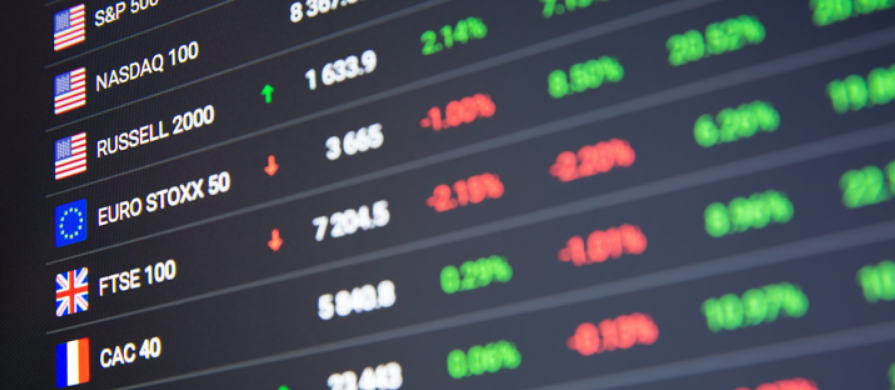
A stock market index—also called a stock price index—is a quantitative indicator that measures the performance of a group of selected stocks within a market. Each company included is known as a component of the index.
By tracking changes in an index’s value over time, investors can understand market fluctuations, identify trends, and formulate investment strategies.
- A rising index indicates improving market conditions and investor confidence.
- A falling index reflects declining prices and weaker market sentiment.
Beyond measuring stock market performance, indices act as barometers for industries and national economies.
- Example: The Nasdaq 100 mirrors the U.S. technology sector.
- Example: France’s CAC 40 reflects both French and broader European economic health.
Why Indices Matter
Stock indices are more than numbers flashing on financial news—they play crucial roles in global markets:
- Market Sentiment → Show if investors are bullish or bearish.
- Benchmarking → Portfolio performance is compared against indices like the S&P 500.
- Investment Vehicles → ETFs and index funds replicate index performance, providing instant diversification.
- Economic Indicators → Policymakers and analysts use indices to gauge overall economic activity.
3. How Are Stock Indices Calculated?
There are two primary methods:
- Market Capitalization-Weighted Indices
Companies with larger market caps have greater influence.
Examples: S&P 500, Nasdaq Composite, Taiwan Weighted Index.
- Price-Weighted Indices
Stocks with higher prices influence the index more, regardless of company size.
Example: Dow Jones Industrial Average (DJIA).
- Free-Float Adjustments
Some indices (like S&P 500, Sensex) only consider shares available to public investors, excluding locked-in insider holdings.
Major Global Stock Market Indices
United States
- Dow Jones Industrial Average (DJIA): 30 large U.S. companies; price-weighted; oldest and most famous.
- S&P 500: 500 large-cap U.S. companies, representing ~80% of U.S. market capitalization.
- Nasdaq Composite: Tech-heavy, includes over 3,000 Nasdaq-listed firms.
- Russell 2000: Tracks small-cap U.S. stocks; important for growth and innovation barometer.
Europe
- DAX (Germany): 40 largest firms on the Frankfurt Exchange; capitalization-weighted.
- CAC 40 (France): 40 top companies on Euronext Paris; mirrors French/Eurozone economy.
- FTSE 100 (UK): 100 largest UK-listed firms; international exposure via energy, mining, and finance.
Asia
- Nikkei 225 (Japan): 225 major companies, price-weighted.
- Hang Seng Index (Hong Kong): Tracks 82 large companies; reflects China-linked finance and real estate.
- CSI 300 (China): Tracks top 300 stocks on Shanghai and Shenzhen exchanges.
- BSE Sensex (India): 30 financially sound companies; free-float weighted.
Global Indices
- MSCI World Index: Covers ~1,500 stocks across 23 developed markets.
- FTSE All-World: Blends developed and emerging markets.
What Influences Stock Indices?
Stock indices rise and fall based on numerous factors:
- Economic Indicators
- GDP growth, unemployment rates, inflation, consumer spending.
- Strong economic data → rising indices; weak data → falling indices.
- Political Factors
- Government policies, regulation, taxation, and international trade disputes.
- Example: Trade wars often depress indices globally.
- Company Performance
- Earnings reports, competition, new innovations.
- Strong earnings from index heavyweights (e.g., Apple, Microsoft) lift entire indices.
- Interest Rate Policy
- High interest rates → borrowing costs rise, stock prices fall.
- Low interest rates → liquidity increases, supporting stock valuations.
- Constituent Changes
- Adding or removing companies (e.g., Tesla joining S&P 500) impacts index value and investor flows.
Global Stock Market Trends (2025 Outlook)
- United States:
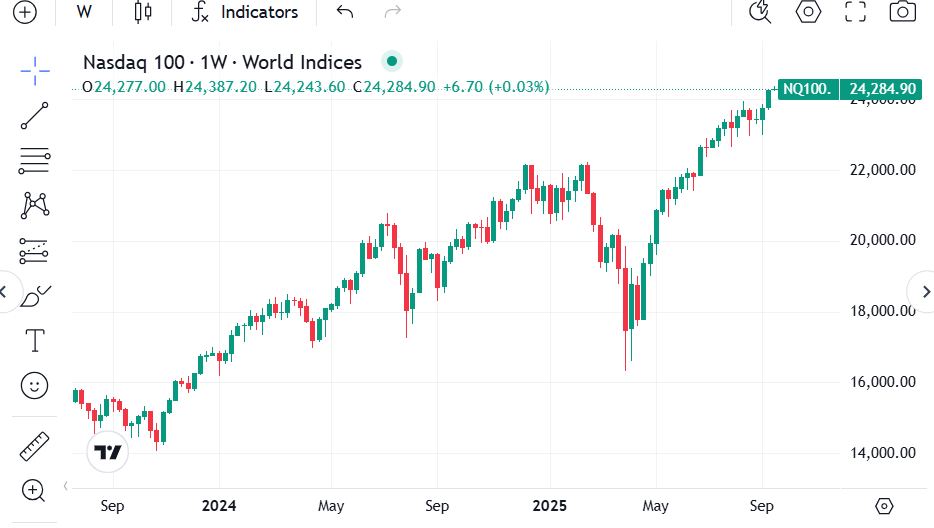
Tech stocks (AI, semiconductors) dominate, pushing the S&P 500 and Nasdaq to record highs. Risk of an AI bubble looms, while Federal Reserve interest rate policies remain uncertain.
- Europe:
The DAX and CAC 40 weakened due to slow growth and energy challenges. However, expectations of ECB rate cuts create rebound potential in financial and consumer sectors.
- Asia:
- China: CSI 300 and Hang Seng Index see short-term rebounds due to policy support, but real estate debt remains a drag.
- Japan: Nikkei 225 thrives on corporate reforms and foreign capital inflows; Bank of Japan policy shifts may reshape investment flows.
- Global Drivers:
- Interest rate cuts anticipated across the U.S. and Europe.
- AI & tech innovation driving growth but risking overvaluation.
- Geopolitical tensions (Russia-Ukraine, Middle East, Taiwan Strait) disrupt supply chains.
- ESG & green energy themes attract long-term capital globally.
How to Trade Stock Indices
Investors can gain exposure to stock indices in multiple ways:
Long-Term Investing
- Index ETFs:
- SPY (tracks S&P 500)
- QQQ (tracks Nasdaq 100)
- DIA (tracks Dow Jones)
- Suitable for passive investors seeking steady growth.
Short-Term Trading
- Futures Contracts: Standardized contracts with expiry dates, often used by institutional investors.
- CFDs (Contracts for Difference): Flexible, leveraged products ideal for retail traders.
Advantages of CFDs:
- Leverage: Trade with a small margin while controlling larger positions.
- Two-Way Trading: Profit from both rising (long) and falling (short) markets.
- Flexible Contract Sizes: Tailored to investor capital.
- Extra Benefits: Potential overnight interest and hedging opportunities.
Limitations of Indices
- Concentration Risk: A handful of mega-cap stocks dominate movements (e.g., Nvidia, Microsoft in S&P 500).
- Bias in Methodology: Price-weighted indices overemphasize expensive stocks.
- Narrow Scope: Some indices cover only a fraction of the economy.
Final Thoughts
Stock market indices are the backbone of modern investing. They simplify complex markets into clear benchmarks, help investors gauge performance, and serve as essential tools for both passive and active strategies.
From the Dow Jones to the MSCI World, indices reflect not just markets—but economies, politics, and investor psychology. For anyone aspiring to trade or invest professionally, understanding indices is a first step toward mastering financial markets.
Read more articles